Start with the material and its care instructions
Tell the cleaner whether the upholstery is fabric, leather or another finish, and send the manufacturer’s label if you can find it. A photo of the surface alone may not settle the question. Removable cushion covers also need their own care instructions; a zip does not automatically mean a cover is machine washable.
Leather should have a separate treatment plan from fabric upholstery. For example, Stressless warns against steam cleaners on its leather furniture. That is product-specific advice, not a rule that every sofa needs the same product. Share your own manufacturer’s guidance so the proposed method can be checked against it.
What our upholstery photographs show
The cover photograph records an upholstery tool in use on a sofa. It shows the working surface and the scale of the hand tool. It does not establish the fabric composition, the solution used or the drying time for a different sofa.
In the separate cushion comparison, the original labels identify the before and after views. Look at the visible marks and the seat surfaces, while allowing for differences in camera angle and lighting. These are photographs supplied by our cleaning team, with their original frames retained.
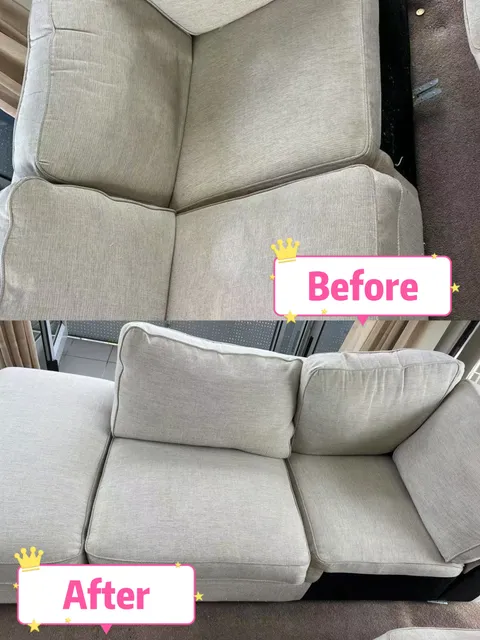
The original Before and After labels identify the upper and lower photographs of the light fabric sofa.
Count more than the number of seats
A three-seat sofa with loose back cushions is a different scope from a compact bench-style seat. Include the chaise, footstool and any armchairs in your enquiry. Explain whether you want attention to the seat cushions only or also the arms, backs and accessible sides.
For dining chairs, tell us how many there are and whether the back as well as the seat is upholstered. If the item has delicate trim, loose seams, worn patches or a previous repair, photograph those details separately. They help us discuss the work before the appointment.
- Sofa layout and approximate dimensions
- Number of loose cushions, armchairs and footstools
- A wide photo, care-label photo and close view of each concern
- Auckland suburb, stairs, lift access and parking details
Describe the mark and anything already tried
Say where a spill or mark is, roughly how long it has been there and what caused it if you know. Please mention any household product, stain spray or previous cleaning attempt. An old mark with an unknown history needs assessment rather than a promise based on another customer’s photo.
Cleaning addresses soiling; wear, colour loss and damaged upholstery are different concerns. Tell us separately about odour or a recurring mark, because a photograph cannot communicate either reliably. The expected result and any limitations should be discussed before work starts.
Plan access and time to dry
Clear loose items from the furniture and explain what can safely move. If a heavy sofa stays against a wall, agree which surfaces can be reached. Keep pets and everyday activity in mind when choosing a time for the visit.
Ask when the upholstery and cushions can be used again and what ventilation is appropriate. Avoid assuming that all materials dry at the same rate, or booking immediately before guests need the sofa. The advice should follow the material, treatment and conditions in your home.
Plan the next step
Send the furniture type, seat and cushion count, care-label details and your suburb. BubblePro offers fabric and leather upholstery cleaning; we will discuss a suitable scope for your items.
Explore the relevant cleaning serviceSee the full cleaning photo gallery